What Thinning Shears Change in a Haircut
Learn what thinning shears change, how weight removal differs from shortening and what to discuss before a barber adjusts your hair density.
By City Barbers2 min read5 sections
In this article
The short answer
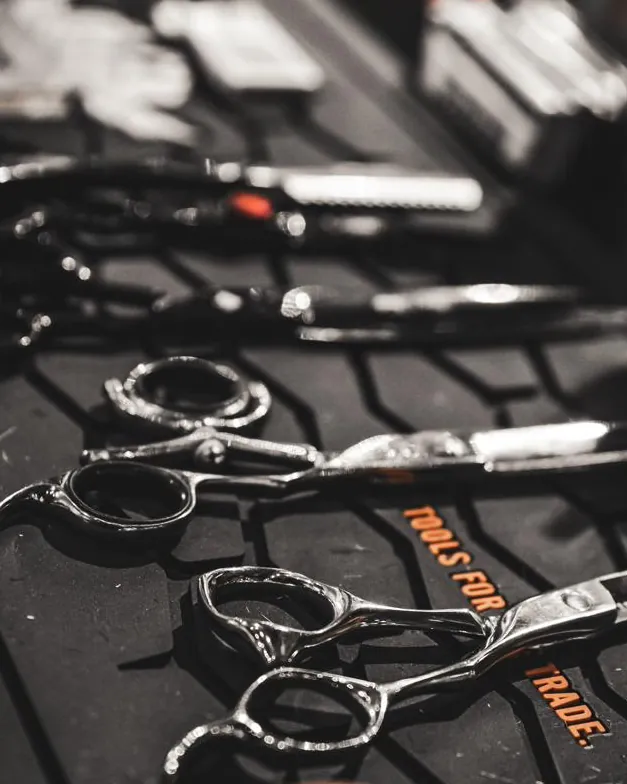
Thinning shears remove selected hairs within a section rather than cutting every strand at one continuous edge. They can reduce bulk or soften a connection, depending on the tool and how it is used. They do not change how densely hair grows from the scalp.
If your haircut feels heavy, the useful question is where that weight sits. Removing hair throughout the whole head is not automatically the right solution.
Describe the problem before choosing the tool
Hair can feel bulky around the upper sides, behind the ears or where layers overlap. Those concerns may be addressed by changing the haircut’s shape, removing selected weight or a combination of approaches.
At the chair
Tell your barber which area becomes difficult during the week. “The sides push outward after a few days” is more useful than requesting thinning shears simply because you have thick hair.
Understand the difference between length and density
A section can retain its longest ends while losing some internal hair. That may make it feel lighter, but it also changes the support beneath the surface. The result is not identical to shortening the perimeter.
Ask what will remain visible after the adjustment. If you like a solid fringe or full lower edge, say that those features should be protected.
Explain any previous result you disliked
Some people find that excessive weight removal leaves their hair too separated or difficult to settle. Others prefer the lighter feel. The relevant details include the texture, location and amount removed, rather than a blanket rule that the tool is good or bad.
If you have a photo from a previous haircut that became wispy, bring it. Explain which part of the finish you want to avoid.
Be cautious about repeating the process at home
It can be difficult to judge how much internal hair has already been removed. Repeated passes through the same area may leave shorter hairs that become more apparent as the haircut grows.
Rather than experimenting throughout the top, ask your barber to assess the specific heavy section. A small planned change is easier to evaluate than several overlapping adjustments.
 Related guideWet vs. Dry Haircuts and Why a Barber May Use BothRead the guide
Ask for a result you can describe
You might want the sides to sit closer while the top stays full, or a softer connection without a visibly thin edge. Those requests give the barber a goal and leave room to choose an appropriate technique.
At City Barbers in Salt Lake City, use the consultation to explain the shape and feel you want. The tool is one part of achieving that haircut, not the definition of it.
Related service
Men’s Haircuts
A full 55 minutes in the chair: your cut, a straight-razor finish, hot and cold towels, a deep tissue massage and a relaxing hair wash.
241 E 300 S, downtown Salt Lake City · Tuesday to Sunday, 8 AM to 8 PM · (801) 243-6915